News―
2026.4.24Spring Special Viewing 2026
Spring Special Viewing Information
Period: April 24–May 24, 2026
Hours: 9:00–17:00 (last admission at 16:30)
Admission: ¥1,000
Azaleas are in bloom, and fresh spring greenery fills the temple grounds.
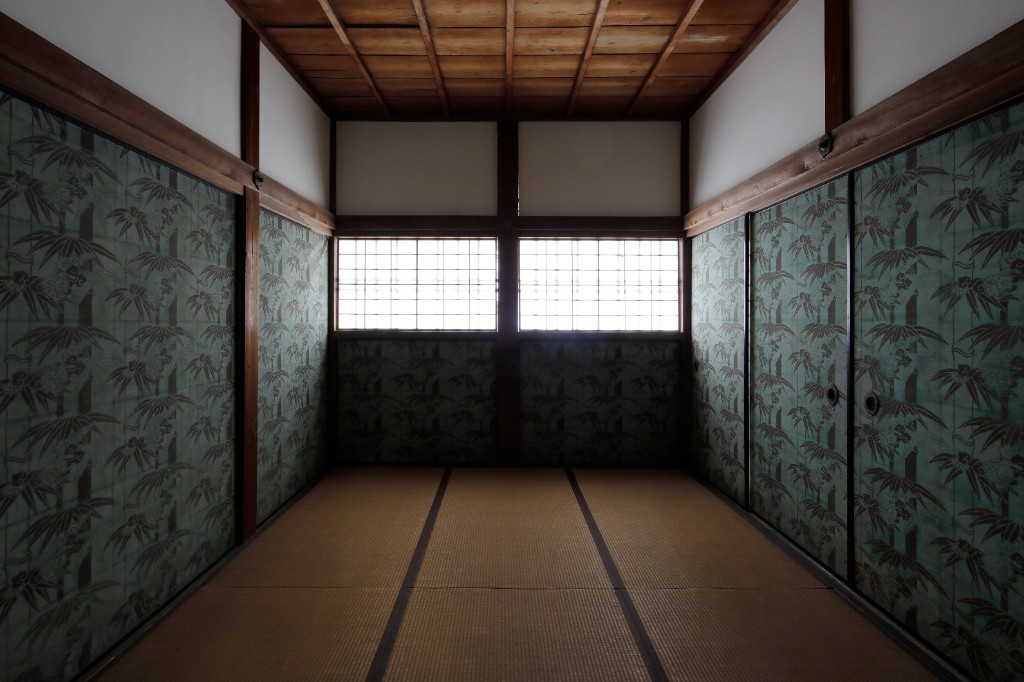
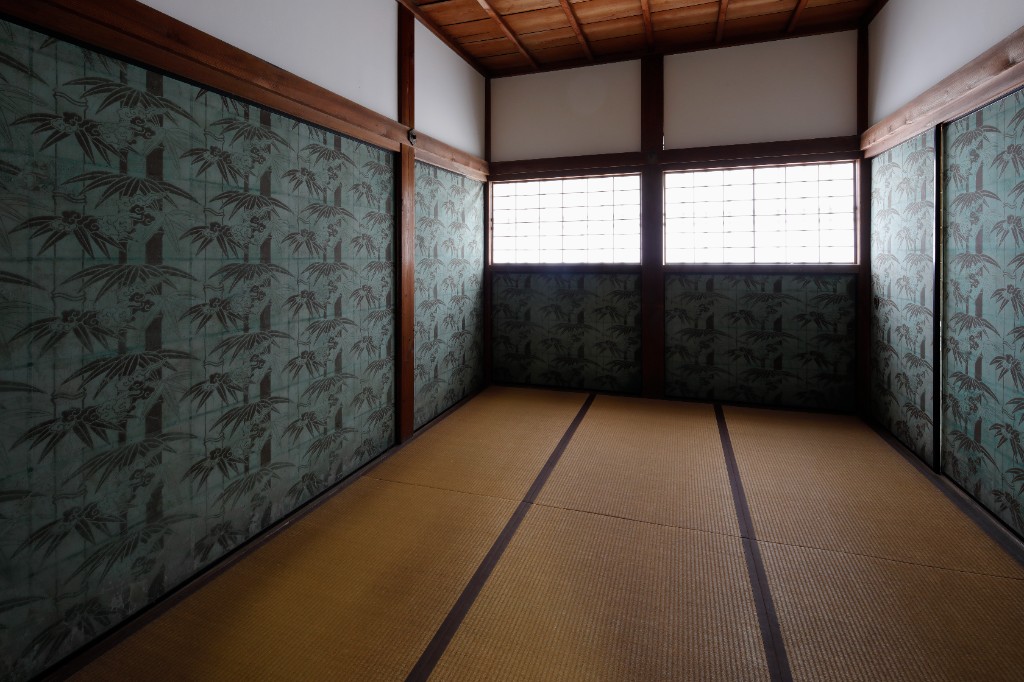
During this year's Spring Special Viewing, a section of the Take-no-ma (Bamboo Room) that is ordinarily closed to the public will be open to visitors.
Upon entering the Take-no-ma, the Chokushi-mon (Imperial Envoy Gate) stands directly ahead. This gate is used exclusively when members of the Imperial Family visit the temple.
Those entering through the Chokushi-mon proceed into Manshuin via the Tora-no-ma (Tiger Room), adorned with fusuma sliding-door paintings by Kano Eitoku.
Attendants enter through the Take-no-ma, which features one of Japan's oldest surviving examples of woodblock-printed decorative paper.
Each group has its own entrance, both leading into spaces that represent the highest levels of artistic and technical achievement.
During this special viewing, visitors can enjoy an exceptional, head-on view of the Chokushi-mon from a normally closed section of the Take-no-ma.
In the gentle spring light, take time to appreciate the same space and view once enjoyed by members of the Imperial Family.
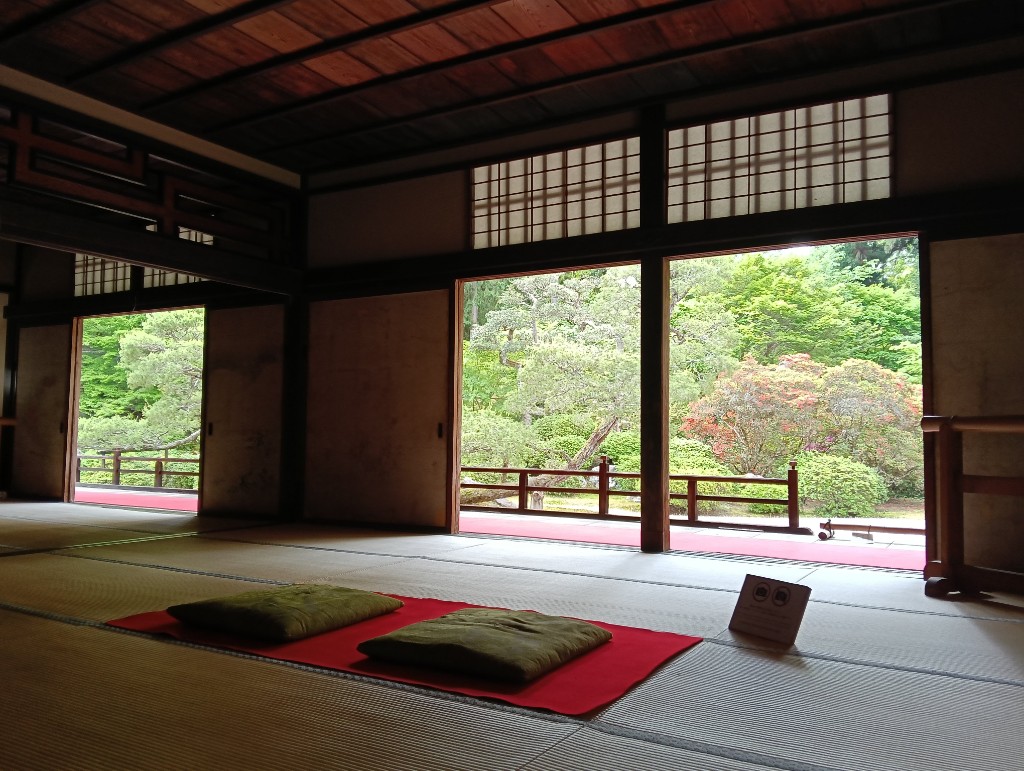
In the O-shoin (Great Shoin), visitors may sit quietly facing the garden and enjoy the changing light across the landscape.
Photography is permitted in the Take-no-ma during the special viewing.
Inside the O-shoin, photography is permitted only from designated locations.
We warmly invite you to visit Manshuin Monzeki this spring.
Take-no-ma (Bamboo Room)
Edo-period fusuma sliding doors made with woodblock-printed karakami paper.
The fusuma in the Take-no-ma, located inside the Great Entrance, feature karakami decorated with bamboo and cloud motifs. At first glance, the bamboo appears to have been painted by hand, but it was in fact printed from woodblocks. The bamboo and cloud design is said to derive from the temple's historical name, "Takenouchi Monzeki." This is known as one of the earliest examples of woodblock-printed karakami in Japan.